Dogs and the Holidays
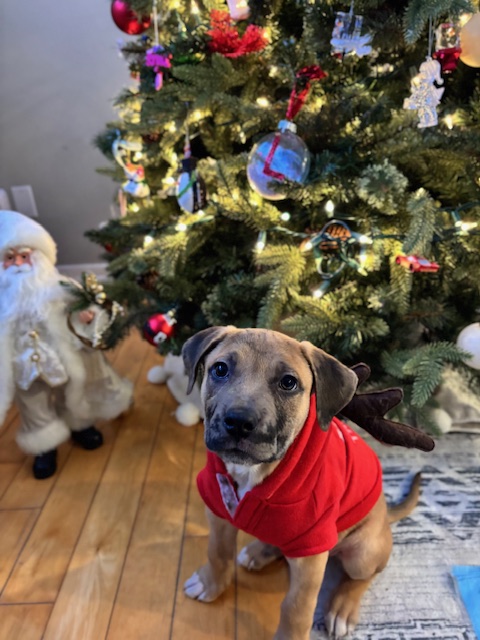
The holiday season is supposed to be a time of joy and celebration – but our pooches don’t necessarily understand what’s going on! The extra and strange people in the home, flashing flights, moving displays, unfamiliar sounds, new scents and decorations can be stressful on our furry family members. Let’s take a moment to think of how we can make the festive season easier for them!
Preparing for Guests
If you’re having several people over, especially people your dog has never met, don’t overwhelm them by having all the people come up to the dog at once. Consider having the people come in one at a time, or bringing your dog outside to meet them in an open area where your dog won’t feel trapped or confined.
Make sure your dog has a quiet space where they can go and not be disturbed. This may be a room, a crate or an area behind an exercise pen. Make sure your guests understand that your dog is not to be disturbed while they are enjoying their down time!
Snack Time?
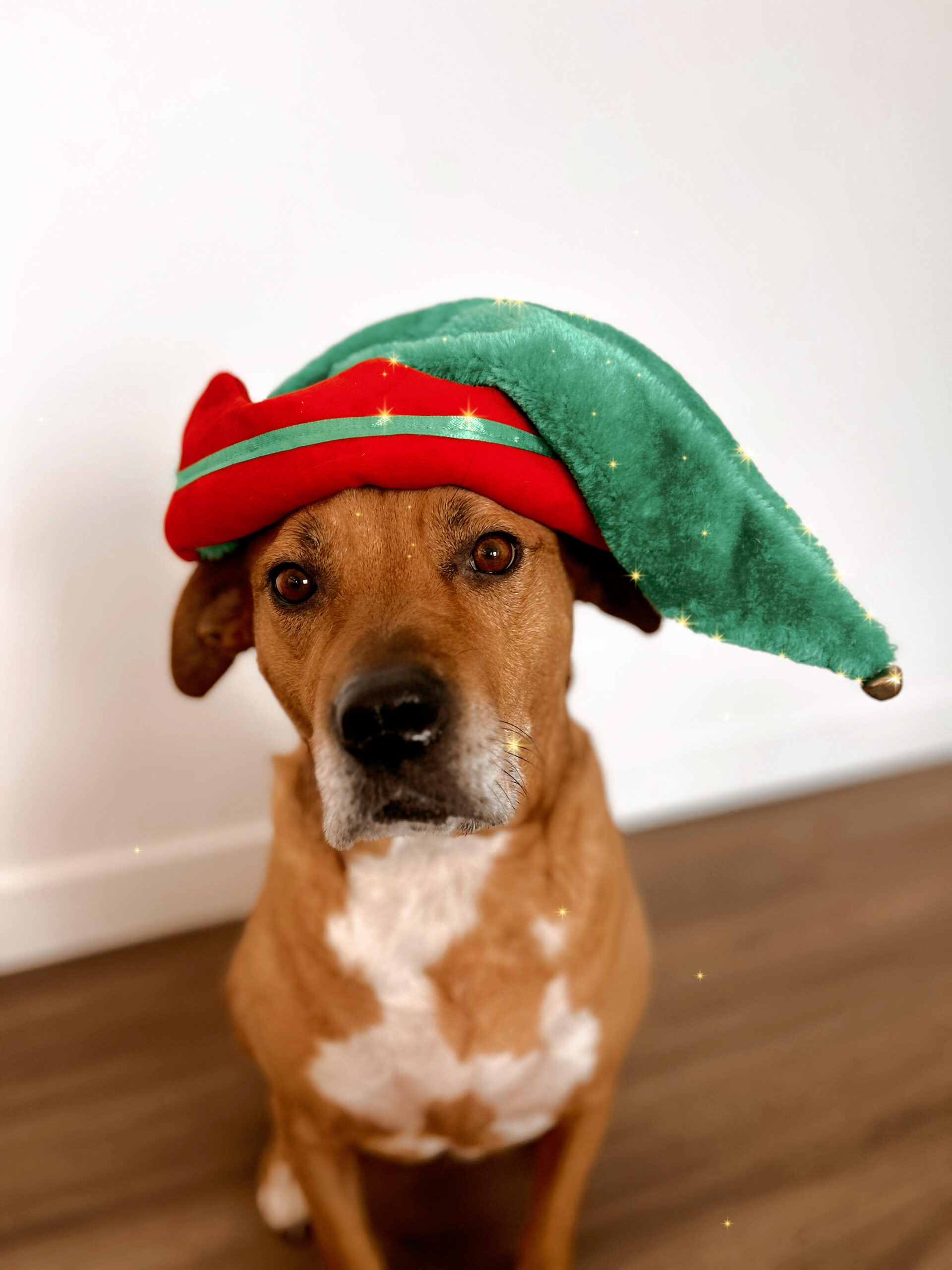
We humans get to enjoy all kinds of tasty treats during the holidays, and it’s tempting to share the love – but go easy on the people food with your pets! There are lots of delicious treats around that your dog would LOVE to sample, but too much can make them sick and some holiday delicacies are even toxic to pets.
Keep snacks and appetizers on higher tables, or make sure your dog is confined to another area when serving food!
Common holiday foods to avoid altogether with your dog:
- Chocolates
- Ham – too fatty for pups and can cause pancreatitis.
- Bones – cooked bones can splinter and cause severe internal damage.
- Alcohol
- Onions/garlic – these common spices are toxic and can cause anemia. Things like gravy and stuffing should be avoided for this reason.
- Xylitol – a common sweetener to keep far away from your pets.
- Macadamia nuts
- Raisins/grapes
While your best bet is to stick to treats intended for dogs, if you want to share, stick to plain, unseasoned foods like cooked carrots or boiled potatoes.
Festive Displays
Lights, especially those that flash, and decorations, especially those that move or make noise, can make your dog quite uncomfortable! Be aware of your dog’s reaction to unfamiliar decorations – watch their body language to see which ones make them uncomfortable.
You can help your dog by spending some time desensitizing them slowly to the decorations. From a distance where your dog can see the scary new decoration but is not reacting to it, mark and reward every time they look at the decoration. As your dog gets more comfortable, you can inch closer and repeat.
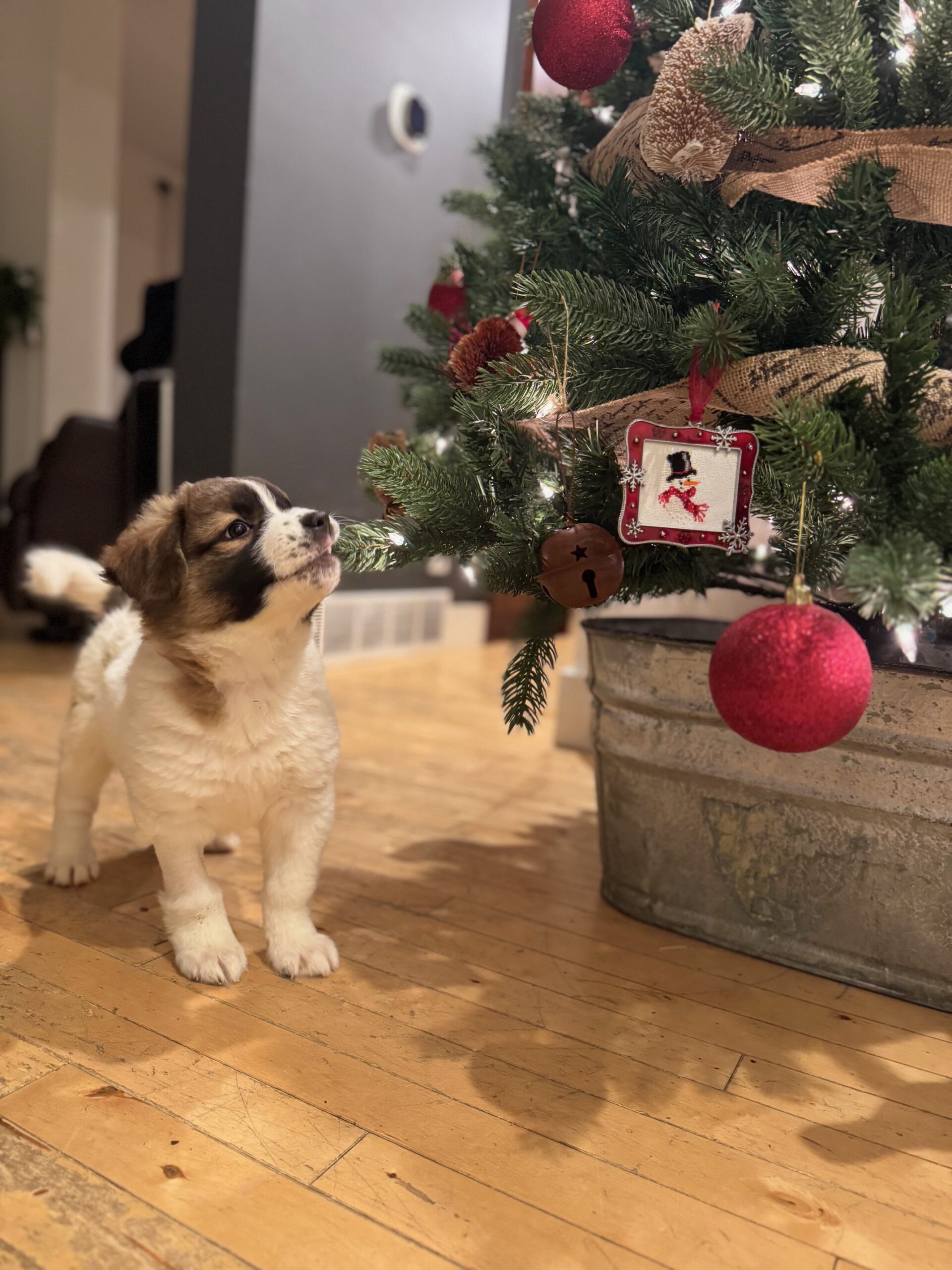
Depending on your dog’s confidence level with new things, this may not be achievable in a short amount of time. In this case, it’s best to avoid using the scary decorations for this year and slowly work towards building your dog’s comfort later!
Change of Plans?
Try to keep up a routine. During most of the year, your dog likely has a pretty set schedule for walks, bathroom breaks and feedings. Make an effort to keep this schedule over the holidays as much as you can – dogs thrive on predictability and routine!
Gift Giving… Or Taking?
If you know your dog is a little too interested in presents or tree ornaments, keep a close eye on this. You may choose to put an exercise pen around the tree, or keep the presents elsewhere, like in a closet or spare bedroom until it’s time to unwrap them!
Make sure to keep ribbons and bows out of reach. If ingested, ribbons can easily tangle and cause severe intestinal issues. Nobody wants exploratory surgery for Christmas!

Jen Coghlan, CPDT-KA
Behaviour Coordinator
Got ideas for our next blog? Email us at [email protected]!